
2026-09-02
Once gas compression moves into the 300 bar range and above, pressure is no longer just a specification on a datasheet. It starts to influence almost every part of the machine, from the number of compression stages and cooling arrangement to valve loading, sealing, materials and protection systems. A compressor that looks suitable from its maximum pressure rating may still be poorly matched to the actual process.
This becomes even more important when the gas must remain clean or the application involves hydrogen, chemically active gases or other demanding process media. In these situations, high and ultra-high pressure diaphragm compressors provide a different approach from conventional piston compression by keeping the process gas separated from the drive mechanism. The selection process should therefore begin with the gas and operating conditions, then work toward the compressor architecture.
At elevated discharge pressures, the relationship between pressure, temperature and mechanical loading becomes increasingly important. Compressing gas raises its temperature, while higher pressure places greater demands on cylinders, valves, seals, diaphragms, piping and connections. These factors cannot be considered separately because a change in one part of the system can affect the others.
For example, increasing the required discharge pressure may call for additional compression stages. More stages can help distribute the pressure increase, but they also introduce additional valves, coolers, instrumentation and maintenance points. The final design is therefore a balance between pressure requirements, flow, thermal management and equipment complexity.
Gas properties further influence the selection. Hydrogen, helium and chemically aggressive gases can create different leakage, material compatibility and sealing challenges. A compressor designed for a relatively straightforward process gas should not automatically be assumed to be suitable for an ultra-high-pressure application involving a different medium.
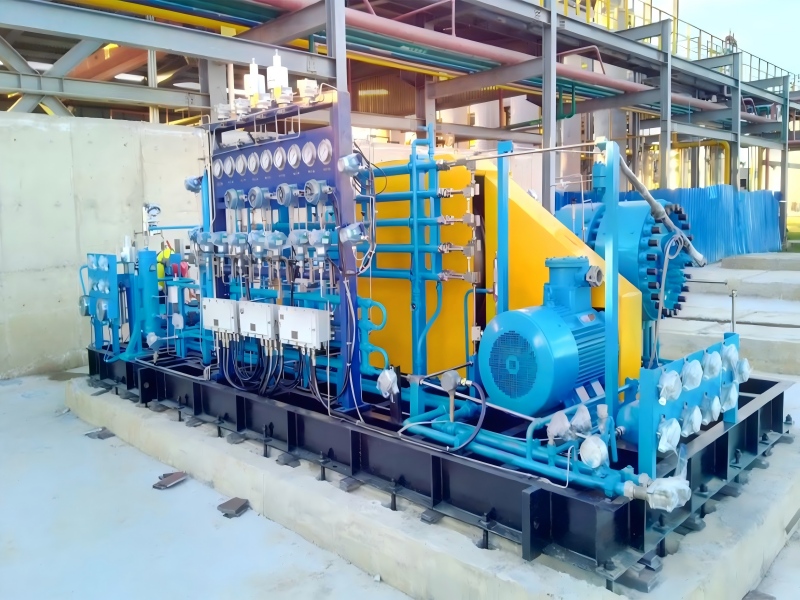
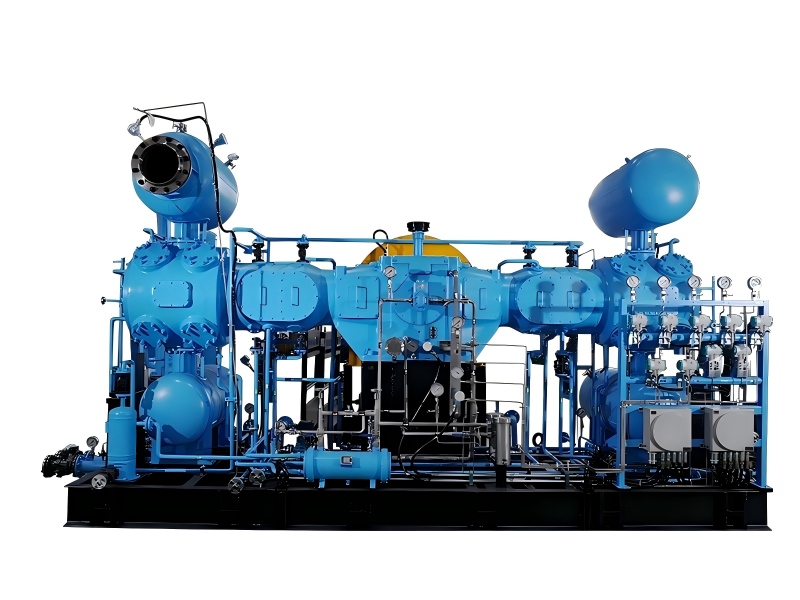
FKW Compressor develops process-gas compression equipment for applications where these factors need to be considered together. Its portfolio includes piston compressors, diaphragm compressors, hydrogen compressors and high and ultra-high pressure diaphragm compressors. Reviewing the available compressor technologies from FKW can help establish which compression principle is appropriate before the final equipment specification is prepared.
When the total pressure increase becomes substantial, dividing the work between several stages can make the compression process easier to control. Instead of asking one cylinder to handle the entire pressure increase, each stage operates across a portion of the overall pressure range.
Intercooling between stages can remove heat generated during compression before the gas enters the next stage. This helps keep the gas within the intended temperature range and can reduce the thermal burden on downstream compression components. The cooling system itself, however, becomes part of the engineering package and needs to be sized according to the actual gas conditions.
The appropriate number of stages depends on several variables, including inlet pressure, final pressure, gas composition, required flow and allowable temperature. There is no universal stage count that applies to every 300 bar or higher application.
For high and ultra-high pressure diaphragm compressors, stage arrangement is particularly important because the compressor must maintain the required gas isolation while generating the specified pressure. Each stage adds another part of the system that has to operate reliably under demanding pressure conditions.
A useful engineering proposal should therefore explain why a particular stage configuration has been selected rather than simply stating the number of stages. Buyers should be able to understand how the proposed arrangement affects pressure distribution, temperature control, capacity and maintenance.
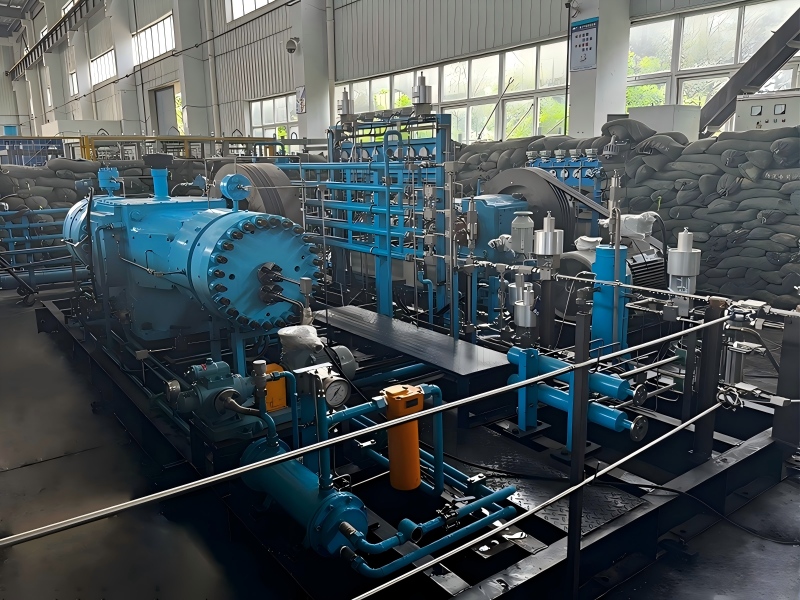
Conventional piston compressors can be effective for many high-pressure applications, but gas-contact and lubrication arrangements become increasingly important when contamination must be tightly controlled. The question is not only whether the compressor can reach the required pressure, but also whether the gas can pass through the compression system without unwanted contamination or leakage.
A diaphragm compressor addresses this issue by using a flexible diaphragm between the process gas and the drive side. The diaphragm moves to compress the gas while maintaining separation from the mechanism and lubricant used to generate that movement.
This makes high and ultra-high pressure diaphragm compressors particularly relevant to applications where gas purity, leakage control and pressure capability need to be considered together. The design is not limited to one type of gas; its suitability depends on the pressure, flow, gas properties, materials and required operating cycle of the project.
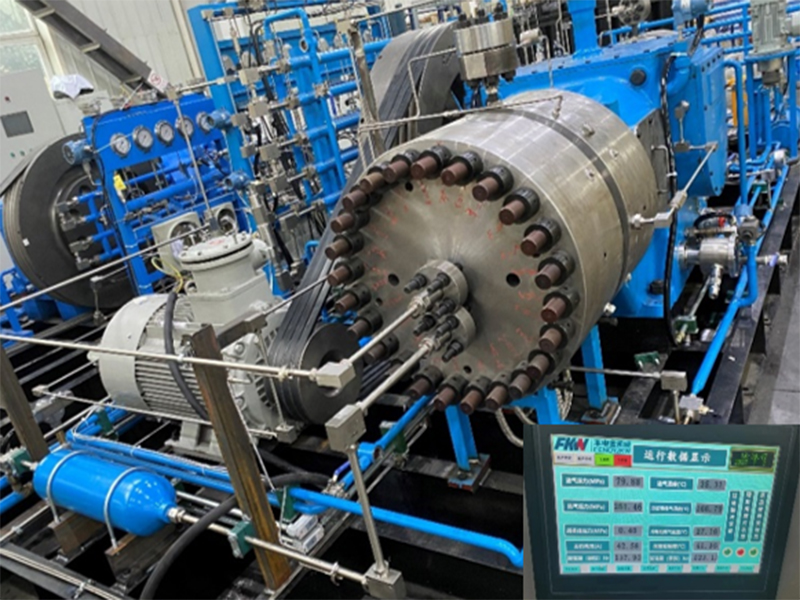
FKW's high and ultra-high pressure diaphragm compressor range is positioned for demanding process-gas applications, including hydrogen and other industries where high-pressure gas handling is critical. FKW's published product information states that its high/ultra-high pressure diaphragm compressor technology reaches pressures up to 320 MPa and is applied to sectors including hydrogen, nuclear power, defense and aerospace. These are published product-range specifications rather than a universal operating limit for all diaphragm compressors.
The same published information identifies oil-free and ultra-pure gas compression as key characteristics of FKW's diaphragm compressor technology. For applications where contamination from lubrication is unacceptable, this gas-isolation principle can be an important part of the equipment selection process.
That does not mean every high-pressure application requires a diaphragm compressor. A conventional piston configuration may be more appropriate where its capacity, maintenance characteristics and gas-contact arrangement fit the process. The choice should follow the actual engineering requirements.
A pressure requirement of 300 bar or more should trigger a more detailed review of the complete compressor package. Pressure alone is not enough to determine whether a machine is suitable.
Start with the gas. The supplier needs to know its composition, purity, temperature and any properties that could affect materials or sealing. Hydrogen, for instance, requires careful attention to leakage control, while corrosive or reactive gases may require specialized wetted materials.
Flow is equally important. A compressor designed around a peak requirement may behave differently when operating at normal load. If the process has significant variation, the supplier should explain how capacity is controlled and where the equipment operates most efficiently.
Temperature should be reviewed at each relevant stage. Ask for the expected discharge temperature, interstage temperatures and cooling requirements under the specified operating conditions. A high-pressure compressor that reaches the pressure target but operates outside its intended thermal range is not a satisfactory solution.
Valve design also deserves close attention. At high pressure, valves experience repeated mechanical and pressure loading. Their response affects capacity, efficiency and reliability. For diaphragm equipment, diaphragm life and monitoring are equally important because the diaphragm performs both the compression function and the separation function.
Pressure protection should be considered as part of the complete system rather than treated as an accessory. Relief devices, instrumentation, control logic, piping and downstream equipment all need to be compatible with the intended pressure envelope.
| Selection Factor | Conventional Piston Compressor | High and Ultra-High Pressure Diaphragm Compressors |
|---|---|---|
| Compression method | Piston directly changes gas volume inside a cylinder | Flexible diaphragm changes gas volume while separating the gas from the drive side |
| Gas isolation | Depends on piston sealing and cylinder design | Physical diaphragm barrier separates process gas from the drive mechanism |
| High-pressure suitability | Suitable for many high-pressure process applications when properly engineered | Designed for applications requiring high or ultra-high pressure together with gas isolation |
| Purity considerations | Lubrication and gas-contact components require careful evaluation | Well suited where contamination control is a major design priority |
| Key maintenance focus | Valves, piston seals, packing, lubrication and cooling | Diaphragm condition, valves, hydraulic or drive system and cooling |
| Typical selection priority | Capacity, pressure, efficiency, maintenance and gas compatibility | Pressure, gas purity, isolation, leakage control and diaphragm reliability |
The comparison should be treated as an engineering framework rather than a ranking. High and ultra-high pressure diaphragm compressors are attractive when gas isolation is central to the application, while piston compressors can remain highly practical for other process duties.
High-pressure compressor reliability does not come from the compressor body alone. The machine has to work together with piping, valves, cooling equipment, controls, instrumentation and safety devices. Weakness in any one of these areas can affect the performance of the entire compression system.
This is especially relevant when the compressor operates continuously. Small problems in valve performance, cooling or sealing can gradually affect capacity and energy consumption before they become obvious equipment failures.
Preventive maintenance should therefore be connected to operating hours and component condition. The maintenance plan for high and ultra-high pressure diaphragm compressors should pay particular attention to diaphragm condition, valve performance, sealing integrity and pressure-related components.
Monitoring can make this process more effective. Depending on the application, useful measurements may include suction and discharge pressure, gas temperature, cooling conditions, vibration and other parameters relevant to the machine design. The goal is to identify changes in operating behavior early enough to prevent an avoidable shutdown.
Supplier support also has a practical impact on reliability. Availability of critical spare parts, technical documentation and troubleshooting assistance can become particularly important when the compressor is part of a production line that cannot easily tolerate extended downtime.
A high-pressure compressor quotation should contain enough information to explain how the proposed machine will perform under the actual process conditions. Guaranteed flow and pressure points are more useful than a maximum pressure figure without a defined operating point.
The proposal should also identify the stage configuration, expected power consumption, cooling requirements, materials, sealing method and maintenance intervals. For high and ultra-high pressure diaphragm compressors, buyers should additionally understand the diaphragm arrangement, expected service conditions and provisions for monitoring diaphragm performance.
Factory testing should be included in the procurement discussion. The acceptance plan can define the operating points that will be checked, together with applicable pressure, flow, temperature, leakage and mechanical performance requirements. The exact test criteria should be agreed between the supplier and purchaser before manufacturing is completed.
Documentation matters as well. Drawings, material information, operating instructions, maintenance recommendations and relevant test records can make commissioning and future service considerably easier.
FKW's published compressor information describes its broader portfolio as covering more than 30 product series, including process-gas piston and diaphragm compressors. Its published high/ultra-high pressure diaphragm compressor range is stated to reach up to 320 MPa. Because these figures describe FKW's current published product range, project-specific performance should still be confirmed against the actual gas, flow and pressure requirements.
It is tempting to compare high-pressure compressors by asking which model can reach the highest pressure. That comparison is rarely enough to support a good purchasing decision.
A more useful evaluation asks how efficiently the compressor reaches the required pressure, how stable it remains at the normal flow rate, how the gas is cooled, how leakage is controlled and what maintenance the equipment will require over time.
For applications involving high-purity gases, the gas-contact arrangement becomes another major factor. This is where high and ultra-high pressure diaphragm compressors can offer a distinct advantage because the diaphragm provides a separation layer between the compressed gas and the drive mechanism.
For other applications, the priorities may point toward piston technology. What matters is that the supplier can explain the engineering relationship between the process requirements and the proposed compressor rather than relying on a single pressure number as evidence of suitability.
High-pressure compression at 300 bar and above requires a broader engineering view than simply selecting equipment with a sufficiently high rated pressure. Stage configuration, gas properties, cooling, sealing, valves, materials, instrumentation and maintenance all influence whether the compressor will perform reliably in service.
High and ultra-high pressure diaphragm compressors are particularly relevant when high pressure needs to be combined with gas isolation and contamination control. Their diaphragm-based compression principle separates the process gas from the drive mechanism, making the technology suitable for demanding applications where gas purity and leakage control are important.
FKW's published product range extends into high and ultra-high pressure diaphragm compression, with stated capabilities of up to 320 MPa for its relevant product range. The actual configuration, however, should always be selected from the process gas, inlet pressure, required outlet pressure, flow, temperature and operating profile.
If you are evaluating a 300 bar or higher gas compression project, providing these operating conditions to FKW's technical team allows the discussion to move beyond a headline pressure rating and toward a compressor configuration that can be evaluated against the real process requirements.
Higher pressure increases the importance of stage configuration, temperature control, sealing, valve performance, material strength and pressure protection. The complete compressor system must be designed around the actual operating conditions.
High and ultra-high pressure diaphragm compressors are worth considering when the application combines demanding pressure requirements with strict gas purity, leakage-control or gas-isolation requirements.
The diaphragm separates the process gas from the drive mechanism. This can reduce the risk of lubricant contamination and provide strong gas isolation in applications where purity is important.
There is no universal stage count. The appropriate arrangement depends on inlet pressure, final pressure, gas properties, required flow, allowable temperature and the compressor design.
Review pressure and flow conditions, gas composition, purity, temperature, cooling, sealing, valve design, materials, maintenance requirements, pressure protection and factory acceptance criteria.
No. Maximum pressure is only one specification. A suitable compressor must also deliver the required flow efficiently while maintaining acceptable temperature, leakage, purity, reliability and maintenance performance at the actual operating point.
 Call us on:
  Email Us:
  Collaborative Innovation Industrial Park, No. 130 Yinhe Road, Southeast Development Zone, Changshu, Jiangsu Province