
2026-08-18
At 90 MPa and above, pressure alone does not define a feasible compressor. Gas composition, required flow, suction pressure, stage arrangement, diaphragm stress, temperature, valve behavior, pressure-boundary materials and testing govern the design.
Ultra-high-pressure equipment should be treated as an engineered project with a verified operating envelope. A maximum nameplate pressure is not a guarantee at every gas and capacity.
State suction and discharge pressures as absolute or gauge and identify normal, maximum operating and design pressure. Give flow as mass or normalized volume with reference conditions. A small change in final pressure or suction condition can materially change stage ratio, temperature and capacity.
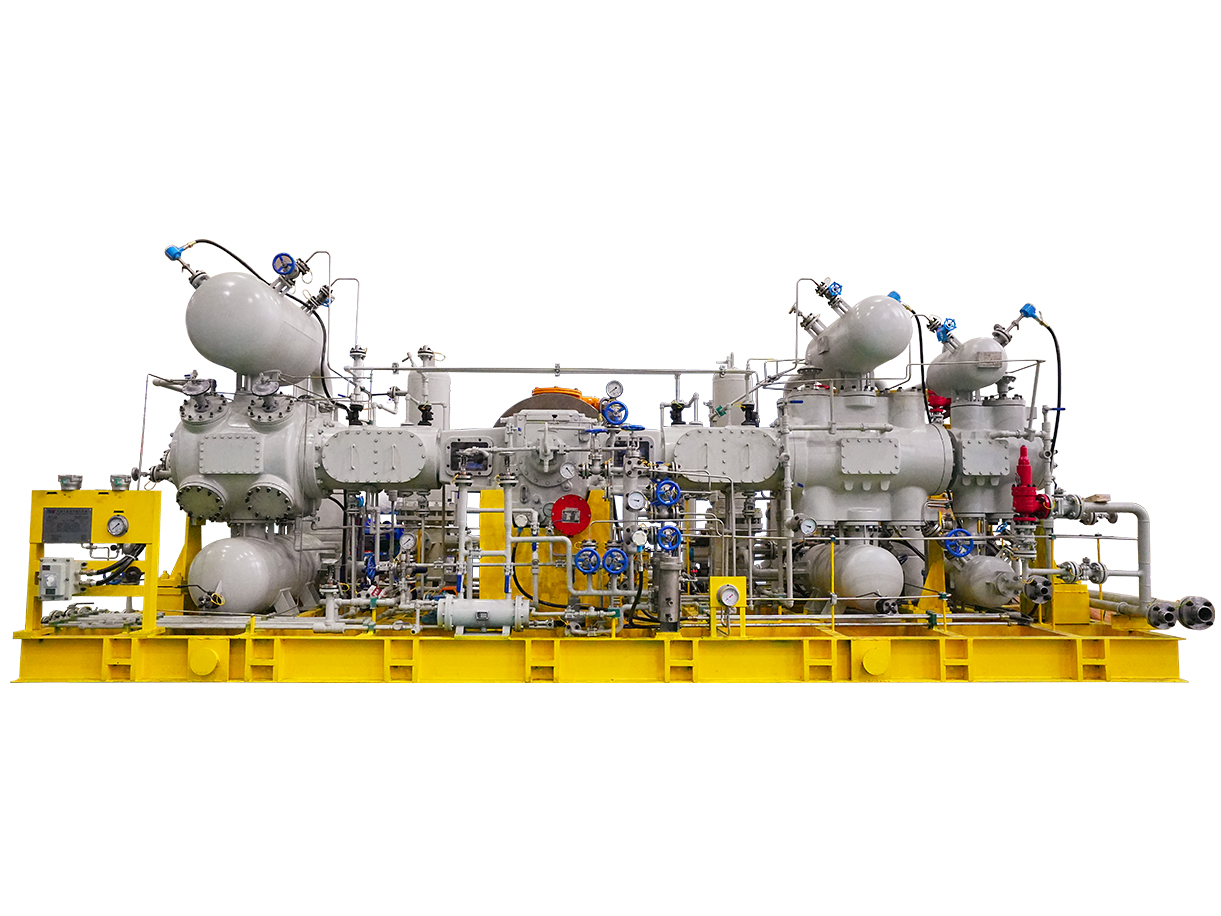
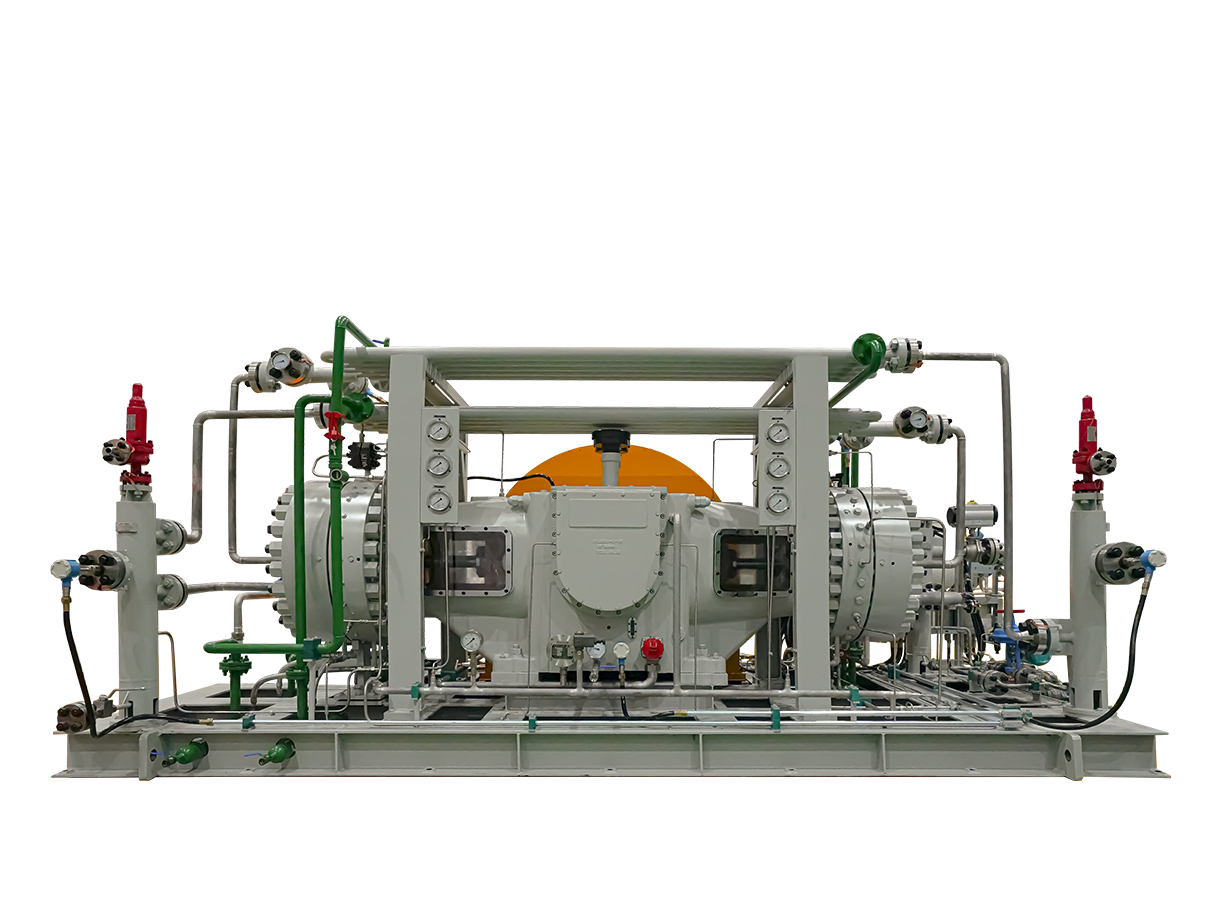
FKWs high and ultra-high-pressure diaphragm compressors should be evaluated at the complete gas-duty point.
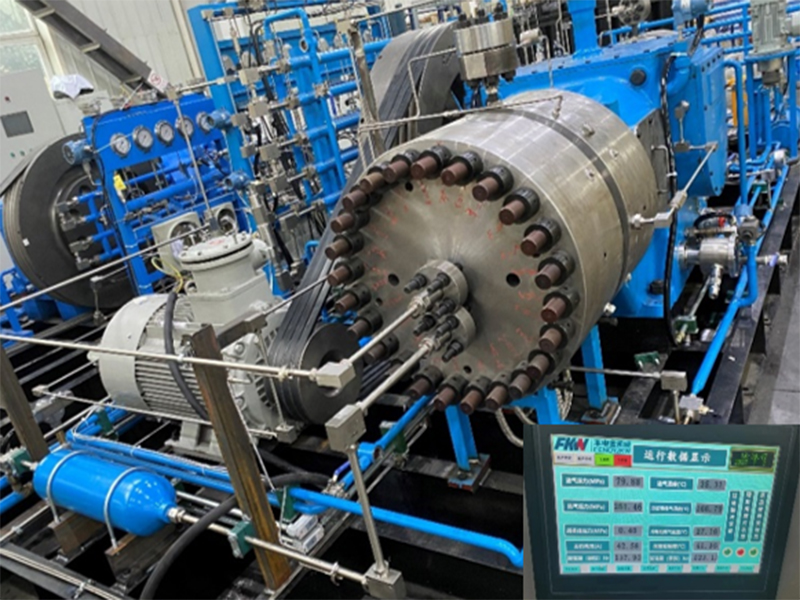
The metallic diaphragm separates process gas from the hydraulic drive, supporting high-purity and difficult-gas applications. Multiple diaphragm layers and monitoring can provide a defined response to layer failure, but the detection method and shutdown logic must be part of the project specification.
Diaphragm material, cavity geometry, deflection, surface condition and hydraulic control are critical at extreme pressure. The supplier must select these from the gas and cycle, not from pressure alone.
| Review area | Questions for 90–320 MPa service |
|---|---|
| Materials | Strength, fatigue, hydrogen/chemical compatibility and traceability |
| Connections | Pressure rating, assembly procedure and inspection access |
| Valves | Opening dynamics, temperature, wear and particle sensitivity |
| Cooling | Heat rejection at all stages and during variable duty |
| Instrumentation | Rated range, isolation, calibration and overpressure protection |
| Testing | Proof/leak/performance method, medium and safe test boundary |
Minimize trapped high-pressure volumes where practical.
Provide guarded boundaries, controlled access and safe vent routing.
Use staged pressurization, purge and depressurization procedures.
Interlock cooling, lubrication/hydraulic conditions and key valve states.
Locate relief devices and instruments for the actual blocked-in scenarios.
Train operators and define remote operation where risk assessment requires it.
The project’s formal hazard analysis and local regulations govern safeguards. Web content cannot replace code review or site engineering.
Agree on pressure/leak testing, capacity verification, gas substitution/correction, vibration/temperature records and diaphragm-monitoring function before manufacture. For tests that cannot use process gas, document the correlation method and limitations.
Define diaphragm/valve service access, torque procedures, special tools, spare strategy and clean assembly controls. At ultra-high pressure, maintenance discipline is part of the pressure-integrity system.
Only if specifically engineered and rated for the required operating cases. Do not infer a broad range from one maximum-pressure claim.
Compatibility is design-specific. Provide full composition, impurities, temperature and purity/containment requirements for review.
Use mass flow or normalized volumetric flow with reference conditions; distinguish it from actual discharge volume.
Yes only with a tested 301 redirect from the existing URL, updated internal links/canonical and monitoring to preserve search equity.
Provide FKW with the gas datasheet, complete pressure/flow envelope, cycle, site codes, utilities and test/document requirements. A feasibility response should identify the guaranteed point, assumptions and safety boundary.
 Call us on:
  Email Us:
  Collaborative Innovation Industrial Park, No. 130 Yinhe Road, Southeast Development Zone, Changshu, Jiangsu Province