
2026-07-28
Diaphragm and reciprocating piston compressors both produce high gas pressure through positive displacement, but they isolate the process gas differently. That difference affects purity, leakage risk, capacity, maintenance and lifecycle cost.
The right architecture is determined by gas composition, suction and discharge conditions, required flow, allowable contamination, duty cycle and applicable codes. A universal pressure boundary between the two technologies is misleading.
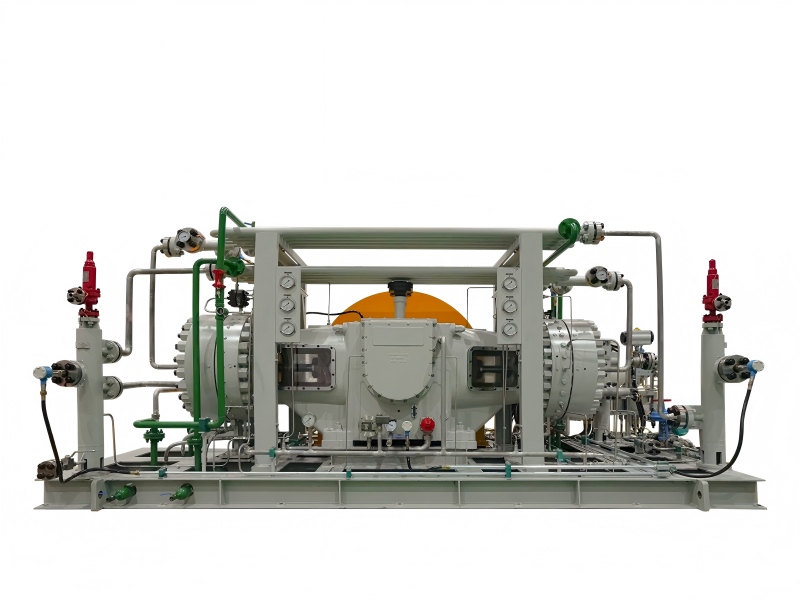
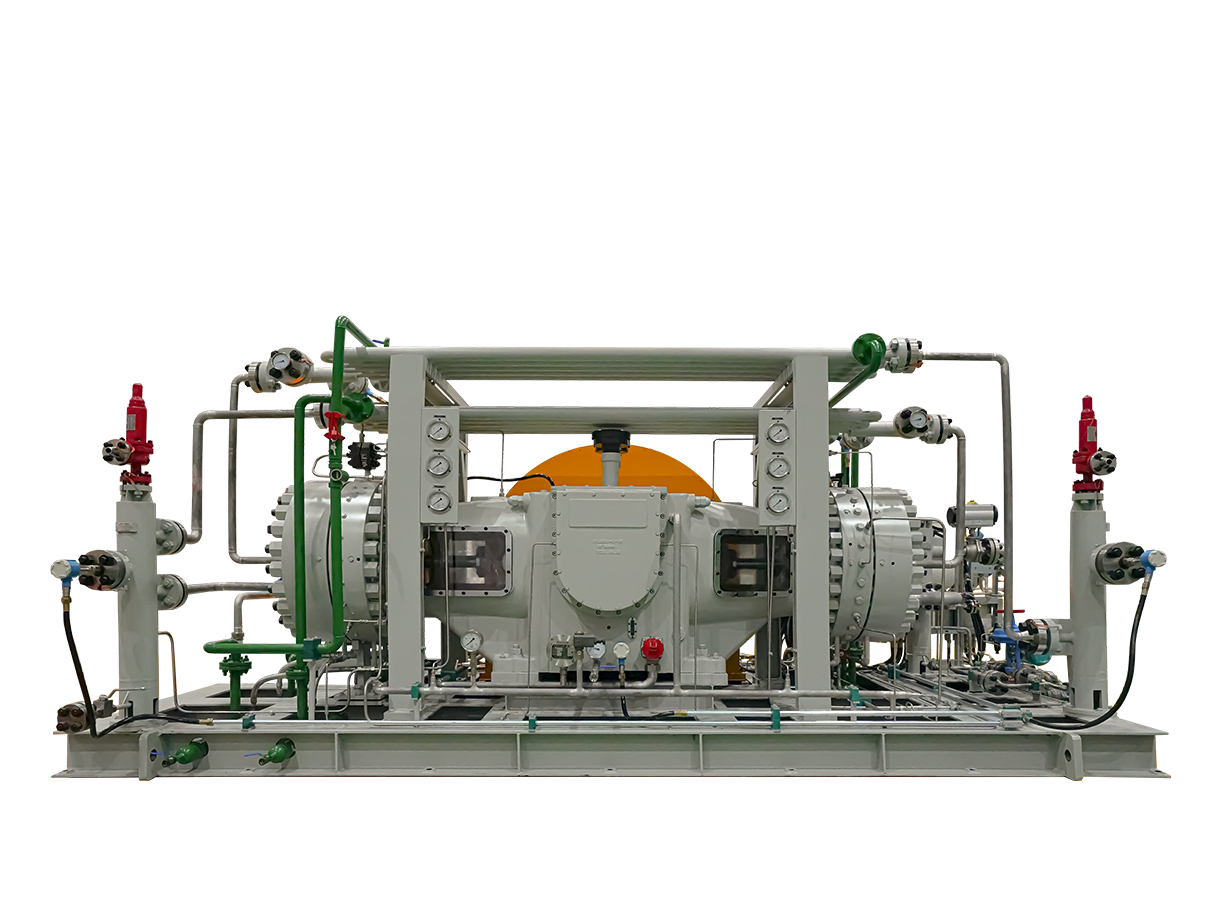
A diaphragm compressor flexes a metallic diaphragm to change the volume of a sealed gas cavity. Hydraulic oil drives the diaphragm from the opposite side, while the process gas remains separated from the crankcase and lubricating system. A piston compressor compresses gas directly in a cylinder using piston rings and packing to control leakage and separation.
For high-purity, toxic, expensive or difficult-to-contain gases, diaphragm compressor systems can provide a strong process boundary. Piston machines often offer greater flow and efficient service across a broad industrial operating range.
| Driver | Diaphragm compressor | Piston compressor |
|---|---|---|
| Gas contamination | Process chamber isolated from hydraulic drive | Packing/ring and lubrication architecture must be reviewed |
| Typical flow | Often lower to moderate, design-specific | Often moderate to high, design-specific |
| Leak containment | Static diaphragm boundary with monitored failure strategy | Packing and distance-piece arrangement govern leakage |
| Wear items | Diaphragms, valves and hydraulic components | Rings, packing, valves and running gear |
| Best decision basis | Purity and containment at required duty | Capacity, efficiency and maintainability at required duty |
This comparison is directional. Staging, speed, cooling, material and standard requirements can change the feasible envelope for either type.
Full gas composition, including traces and expected variation
Molecular weight, compressibility and heat-capacity data
Toxicity, flammability, corrosivity and polymer compatibility
Condensation, hydrate, polymerization or particle risks
Required vent, purge, leak-detection and shutdown philosophy
Hazardous-area classification and local code requirements
For hydrogen and other low-molecular-weight gases, containment and material compatibility deserve explicit review. State whether gas recovery or vent collection is required.
Provide pressure as absolute or gauge and include suction temperature, because ambiguity changes pressure ratio and power estimates. The supplier should evaluate stage ratio, discharge temperature, cooling, valve behavior and pulsation at minimum, normal and maximum flow.
A turndown method—speed control, unloaders, recycle or on/off operation—must be part of the duty analysis. Frequent starts or long recycle operation can affect thermal behavior and maintenance.
Ask for predicted replacement intervals with stated duty assumptions, access space, lifting needs, special tools, recommended spares and condition-monitoring points. Diaphragm replacement and piston packing service require different skills and outage planning.
The purchasing decision should include installed utilities, cooling, control integration, spare inventory, planned downtime and gas-loss consequences—not only compressor price.
A diaphragm compressor is often considered because of gas isolation, but final selection depends on flow, pressures, duty, materials and project codes.
Oil-free cylinder arrangements are possible, but the complete contamination and packing design must be reviewed for the application.
Both can reach high pressures in engineered configurations. Feasibility depends on gas, flow, staging, temperature, materials and standards.
Send gas composition, suction/discharge pressure and temperature, normal/min/max flow, duty, purity, utilities, standards and site conditions.
FKW Compressor can compare architectures after reviewing a complete process datasheet. The proposal should state guaranteed points, power/cooling, containment, controls, tests, maintenance assumptions and exclusions.
 Call us on:
  Email Us:
  Collaborative Innovation Industrial Park, No. 130 Yinhe Road, Southeast Development Zone, Changshu, Jiangsu Province