
2026-08-11
API 618 projects require more than selecting a compressor frame from pressure and flow. The purchaser, packager, and plant disciplines must align the gas cases, materials, cylinders, pulsation control, piping forces, driver, lubrication, controls, and inspection scope.
Project editions and client supplements differ. The requisition should identify the governing edition and every exception rather than using ‘API compliant’ as an undefined label.
Define normal, rated, alternate, startup, recycle, and settling-out cases. Provide gas composition and properties for each meaningful case, including possible liquid or solids carryover. The compressor must be evaluated across suction-pressure, temperature, and molecular-weight variation.
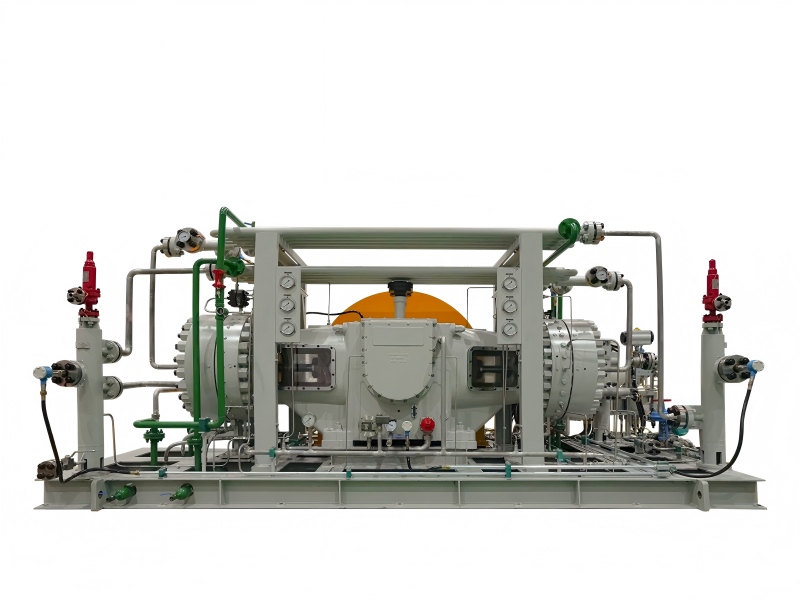
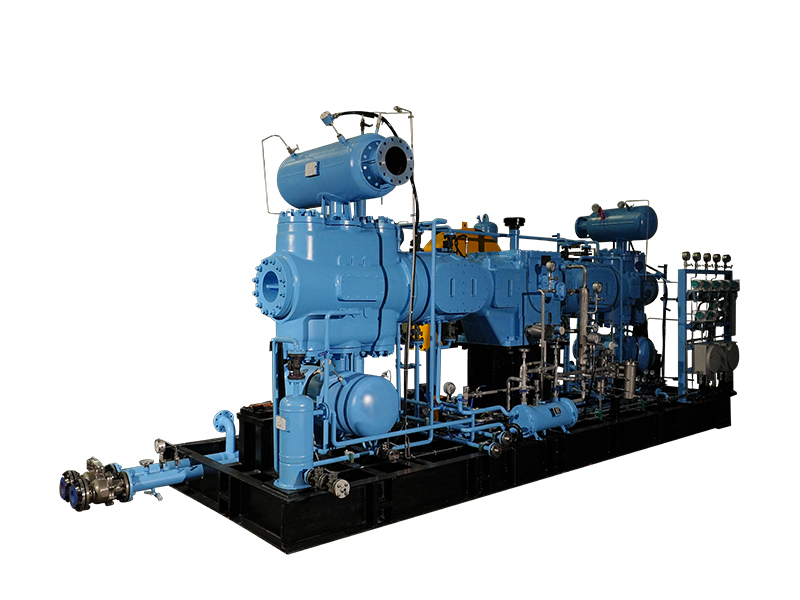
FKW reciprocating piston compressor packages should be quoted from a controlled datasheet and deviation list. State the basis for capacity tolerance, power guarantee, and performance correction.
Stage pressure ratio and predicted discharge temperature
Maximum allowable rod load in tension and compression
Piston speed and valve velocity assumptions
Cylinder cooling and liquid-separation provisions
Capacity control at every required operating point
Expected gas leakage and vent collection from packing
A machine can meet rated flow and still be unsuitable at an alternate molecular weight or low suction pressure. Review margin and limiting case explicitly.
Reciprocating flow produces pressure pulsation that can excite piping and structures. The required acoustic and mechanical studies depend on the project and system complexity. The model must use representative piping geometry, volumes, restrictions, and operating cases; late piping changes can invalidate results.
Translate study recommendations into controlled drawings: bottle/nozzle geometry, orifice sizes, supports, and piping layout. Confirm responsibility for field verification and management of change.
| Discipline | Interface to close |
|---|---|
| Process | P&ID, relief, recycle, drains, vents, and separators |
| Mechanical | Nozzle loads, maintenance access, lifting, and alignment |
| Civil | Foundation loads, dynamic forces, and grout/anchor plan |
| Electrical | Driver, starting, hazardous-area classification, and earthing |
| Controls | Capacity logic, alarms, trips, and plant communications |
| Reliability | Monitoring points, spares, special tools, and turnaround plan |
Prepare an inspection and test plan that identifies purchaser witness/hold points, material traceability, welding/NDE, hydrostatic tests, mechanical running test, and performance verification. Clarify whether full-load gas testing is possible or how shop results will be correlated.
Before shipment, close punch items, preservation, flange protection, loose-item lists, drawings, manuals, and data-book requirements. The value of an API-based package comes from executed evidence, not a badge on a brochure.
No. Applicability is defined by the purchaser, industry, and project requirements. Confirm the governing standard and edition.
Pressure pulsation can cause vibration, fatigue, valve issues, and measurement error. The study helps design bottles, restrictions, and piping/supports.
It records every proposed difference from the requisition, standard, and client supplement so it can be reviewed before award.
The limiting case may be maximum pressure ratio, temperature, rod load, power, or valve performance—not necessarily the normal rated point.
Send FKW the process datasheet, project specification, P&ID, layout constraints, and inspection requirements. Early interface closure reduces redesign during pulsation review, fabrication, and site installation.
 Call us on:
  Email Us:
  Collaborative Innovation Industrial Park, No. 130 Yinhe Road, Southeast Development Zone, Changshu, Jiangsu Province