
2026-09-09
When a process depends on a clean and stable gas supply, the compressor can quietly become one of the most important pieces of equipment in the system. Pressure has to be reached, but the gas must also arrive downstream with the right purity, temperature and flow. A compressor that meets the pressure requirement on paper may still create problems if its sealing method, lubrication or operating range does not suit the gas.
This is particularly relevant to hydrogen. A hydrogen compressor may operate between production, purification, storage or other process stages, and each position can impose different demands on the equipment. Some applications prioritize capacity and operating flexibility, while others put much more weight on gas isolation and contamination control.
That is where the difference between piston and diaphragm compression becomes practical rather than theoretical. The two designs approach gas compression differently, so the better choice depends on what needs to happen to the gas throughout the compression process. Looking at pressure and flow together with purity, sealing, cooling and maintenance usually leads to a more reliable decision.
Diaphragm and piston compressors both use positive-displacement compression, but they do not treat the process gas in the same way. In a piston compressor, the piston moves directly inside a cylinder to reduce the gas volume. In a diaphragm compressor, a flexible diaphragm forms the boundary of the gas chamber and transfers the compression movement without direct contact between the process gas and the drive mechanism.
That difference affects more than the internal structure of the machine. It influences how engineers approach lubrication, sealing, gas purity, leakage control and maintenance. The importance of each factor depends on the process.
For a conventional industrial gas where contamination limits are manageable, a piston compressor can offer a practical combination of capacity, pressure capability and operating flexibility. When the process gas must remain isolated from lubricated mechanical components, diaphragm compression becomes more attractive.
This distinction is particularly useful when selecting a hydrogen compressor. Hydrogen applications can place greater emphasis on leakage control, purity, material compatibility and reliable sealing. The right compressor should therefore be selected from the actual process requirements rather than from a generic equipment category.
FKW Compressor provides different process-gas compression technologies for different operating conditions. Reviewing the compressor products available from FKW can help buyers understand the available options once the basic gas, pressure and flow requirements have been established.
The operating principle of a piston compressor is relatively easy to understand. During the suction stroke, the piston moves to create space for the incoming gas. The suction valve allows gas to enter the cylinder. The piston then reverses direction and reduces the gas volume, increasing its pressure. When the cylinder reaches the required discharge condition, the discharge valve opens and the compressed gas moves into the downstream system.
The simple principle does not mean that all piston compressors perform alike. Cylinder dimensions, piston speed, valve design, clearance volume, sealing, lubrication and cooling can all change the behavior of the machine.
When the required pressure increase is substantial, the compressor can be divided into multiple stages. Rather than producing the entire pressure rise in one step, each stage handles part of the compression duty. Intercooling can then remove heat between stages and help keep the gas within the intended temperature range.
For a hydrogen compressor, piston sealing deserves particular attention. Hydrogen is difficult to contain because of its small molecular size, so packing, piston rings, valves and connections need to be evaluated as part of the gas-tightness strategy.
Lubrication also needs to match the process. Some hydrogen applications can use appropriately designed lubricated equipment, while applications with strict purity requirements may call for an oil-free configuration or a different compression technology. The decision should be based on the acceptable gas quality and the complete compressor design.
A diaphragm compressor takes a different approach to moving the gas. A flexible diaphragm separates the process gas from the drive mechanism. As the diaphragm moves, the volume of the gas chamber changes, drawing in and compressing the gas without requiring the process gas to contact the crankcase or other drive-side components.
This separation is the main reason diaphragm compressors are considered for sensitive process gases. If lubricant or mechanical wear particles cannot enter the gas stream, keeping the gas physically separated from the drive mechanism can simplify contamination control.
For this reason, diaphragm compressors can be relevant to hydrogen, helium, oxygen and certain toxic, corrosive or high-purity gases. Their suitability is still determined by the actual gas composition, pressure, flow, temperature and duty cycle. A diaphragm design should never be selected solely because the application involves a particular gas.
The diaphragm itself becomes one of the key components in the system. It has to flex repeatedly while maintaining the required pressure boundary. Diaphragm material, construction, stroke, cooling, pressure conditions and monitoring can all affect service life.
This is especially important for a hydrogen compressor. When the process places a strong emphasis on gas purity and isolation from the drive mechanism, diaphragm compression can provide a useful alternative to conventional piston arrangements.
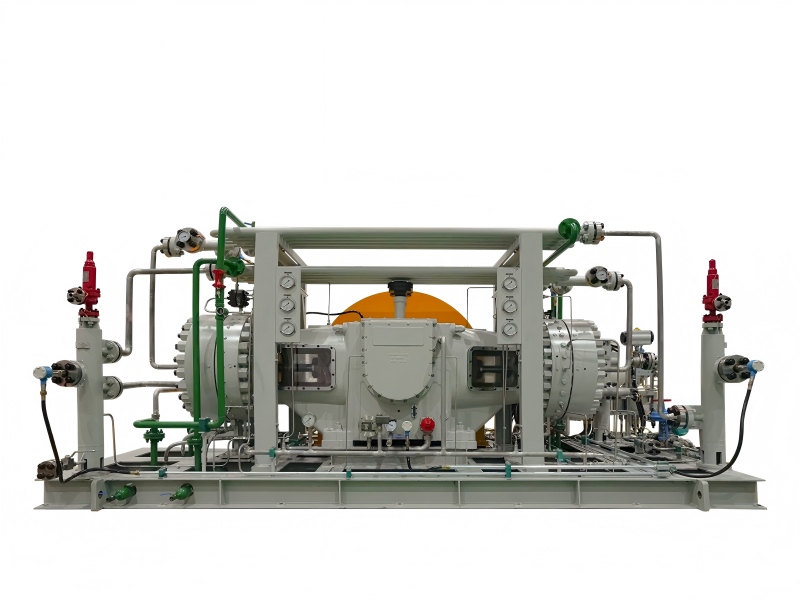
Process gas selection starts with understanding what the gas needs from the equipment. Hydrogen may require careful consideration of leakage, purity and materials, while a corrosive chemical gas may place greater emphasis on the compatibility of every wetted component.
A hydrogen compressor should therefore be considered as part of the entire gas path. Seals and valves are important, but so are piping connections, instrumentation, coolers and downstream equipment. A well-designed compressor cannot compensate for a weak gas-handling system elsewhere in the installation.
Purity requirements should be defined before choosing the compression method. If the hydrogen must remain highly clean, buyers need to know which components contact the gas and whether the lubrication system creates any potential contamination risk.
Flow conditions deserve the same attention. A compressor operating at a steady flow is easier to match than one that must repeatedly move between low demand and peak demand. If the load changes during normal operation, the supplier should explain how the compressor will maintain stable performance across that range.
FKW's hydrogen compressor solutions can be evaluated together with diaphragm compressor configurations when the application requires controlled gas compression. The final configuration should be based on hydrogen composition, inlet pressure, discharge pressure, flow, temperature, purity and operating profile.
Pressure and flow are usually the first specifications listed on a compressor inquiry, and for good reason. They determine much of the basic equipment design. But they do not tell a buyer how the compressor will behave during years of operation.
Maintenance is one example. A piston compressor typically brings attention to piston sealing, packing, valves, lubrication and cooling. A diaphragm compressor shifts much of that attention toward the diaphragm, valves, drive-side components, cooling and diaphragm monitoring.
Neither maintenance approach is automatically simpler. What matters is which set of components is easier to maintain under the actual process conditions and how much downtime can be tolerated.
| Selection Factor | Piston Compressor | Diaphragm Compressor |
|---|---|---|
| Compression method | A piston directly changes the volume of the gas inside the cylinder. | A flexible diaphragm changes the volume of the gas chamber. |
| Gas isolation | Relies on piston rings, packing, seals and cylinder design. | The diaphragm physically separates the process gas from the drive mechanism. |
| Purity considerations | Lubrication and gas-contact components need careful evaluation. | Well suited when keeping the process gas isolated is a priority. |
| Hydrogen service | Can be suitable when sealing, materials and lubrication meet the process requirements. | Can be attractive when hydrogen purity and gas isolation are especially important. |
| Typical maintenance focus | Valves, piston sealing, packing, lubrication and cooling. | Diaphragm condition, valves, drive-side components and cooling. |
| Main selection priorities | Capacity, pressure, efficiency, flexibility and maintenance. | Gas purity, isolation, leakage control, pressure and diaphragm reliability. |
The comparison is most useful when applied to a specific process. If the main concern is delivering a relatively large gas flow with broad operating flexibility, piston compression may be worth prioritizing. If the process cannot tolerate contact between the gas and the drive-side environment, diaphragm compression deserves closer consideration.
One common mistake in compressor selection is to compare machines using only maximum pressure and maximum flow. Those figures define the boundaries, but they may say little about normal operation.
For a hydrogen compressor, the supplier should know the normal inlet pressure, required discharge pressure, typical flow, maximum flow and gas temperature. If the process varies significantly during the day or between production cycles, that information should be included as well.
Temperature is particularly important when pressure is increased through multiple stages. Compression adds heat to the gas, and that heat has to be managed. Depending on the design, cooling may take place at the cylinder, between stages or through a combination of cooling arrangements.
Energy consumption should also be assessed at the expected operating point. A motor's rated power does not tell the buyer how efficiently the compressor converts electrical input into the required gas output. For equipment that operates for long periods, the difference can become significant over its service life.
Operating range matters for another reason: equipment that spends most of its time far away from its intended operating point may experience lower efficiency or less stable operation. A supplier that understands the full load profile can make a more useful recommendation than one working from a single peak figure.
A good compressor specification gives the supplier enough information to understand the process without filling in important gaps through assumptions.
Start with the gas composition and purity requirement. Then define the inlet pressure, outlet pressure, normal flow and maximum flow. Add gas temperature, operating hours and expected changes in demand. For chemical gases, include relevant information about corrosiveness, toxicity or reactivity.
The supplier should explain why the proposed compressor type matches those conditions. If a diaphragm compressor is recommended, the discussion should cover diaphragm construction, gas isolation, expected operating conditions and maintenance. If a piston compressor is proposed, ask about piston sealing, valves, lubrication and contamination control.
Cooling should be addressed at the same time. The proposal should make clear how the expected gas temperatures will be controlled and what auxiliary equipment is required.
For demanding process gas applications, factory testing can provide another layer of confidence. The acceptance criteria should be agreed before manufacturing and should correspond to the actual project requirements. Pressure, flow, temperature and leakage performance can then be assessed against the agreed conditions rather than a generic claim.
It is also worth discussing spare parts and service before placing the order. A compressor is not a short-term purchase. Access to replacement components, maintenance information and technical support can have a direct effect on uptime and long-term operating cost.
The easiest way to make compressor selection unnecessarily complicated is to start by choosing a machine type and then try to make the process fit it. Starting with the gas and its operating conditions usually leads to a more practical shortlist.
Consider two hydrogen applications. Both may need a hydrogen compressor, but one may be primarily concerned with flow capacity and changing demand while the other may place much more emphasis on purity and gas isolation. Treating them as identical applications simply because they use the same gas can lead to an unsuitable equipment choice.
The same logic applies to chemical processes. Gas composition can influence material selection, sealing requirements and contamination control. Pressure and flow then determine the compression arrangement, while operating hours and load variation affect the practical maintenance and efficiency requirements.
FKW's range of process-gas compression technologies allows these factors to be considered together. Rather than assuming that one compressor type is appropriate for every process, the better approach is to compare the available designs against the conditions the equipment will actually face.
The choice between a diaphragm compressor and a piston compressor is ultimately about fit, not labels. Both technologies can be useful in process gas applications, but they solve the gas-handling problem in different ways.
A piston compressor can be a practical option when capacity, pressure, operating flexibility and established maintenance practices fit the process. A diaphragm compressor becomes particularly interesting when physical separation between the process gas and the drive mechanism is important.
For hydrogen service, selecting the right hydrogen compressor requires more than checking the final pressure. Gas purity, leakage control, flow variation, cooling, materials, energy use and maintenance all contribute to whether the equipment will work well in the real process.
If you are comparing compressor options for hydrogen or another process gas, providing the actual gas composition, pressure, flow and operating conditions to FKW's technical team gives the supplier a much stronger basis for recommending the appropriate compression technology.
A piston compressor compresses gas directly through piston movement inside a cylinder. A diaphragm compressor uses a flexible diaphragm to change the volume of the gas chamber while separating the process gas from the drive mechanism.
Yes. A diaphragm compressor can be suitable for a hydrogen compressor application when gas purity, isolation and contamination control are important. The final choice still depends on pressure, flow and other process conditions.
A piston compressor may be preferable when its capacity, pressure range, operating flexibility and maintenance characteristics match the process and its gas-contact arrangement can meet the required purity level.
The diaphragm creates a physical separation between the process gas and the drive mechanism. This can reduce the risk of lubricant entering the compressed gas.
Important information includes hydrogen composition, purity, inlet pressure, outlet pressure, flow range, temperature, operating hours and load variation. Material compatibility and leakage-control requirements should also be identified.
No. Pressure is essential, but flow, gas purity, sealing, cooling, energy consumption, maintenance and the actual operating profile can be equally important.
 Call us on:
  Email Us:
  Collaborative Innovation Industrial Park, No. 130 Yinhe Road, Southeast Development Zone, Changshu, Jiangsu Province