
2026-08-19
Gas compression looks straightforward until the pressure gets high, the gas becomes difficult to handle, or purity starts to matter. A piston moving inside a cylinder can create the required pressure, but the way that motion interacts with valves, seals, cooling and the process gas determines how well the compressor performs in service.
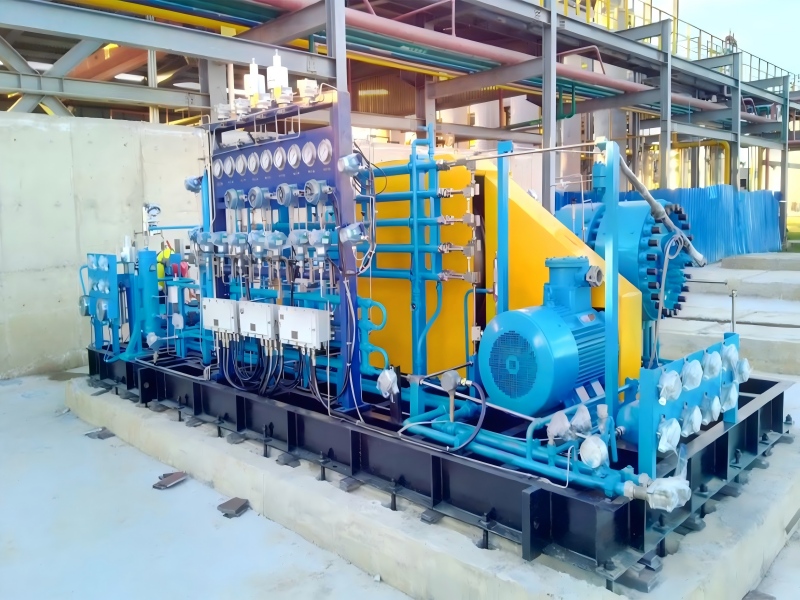
A reciprocating piston compressor is a positive-displacement machine. It draws gas into a cylinder, reduces its volume with a piston and then sends the compressed gas to the discharge side. The principle itself is simple. The engineering behind a reliable machine is not. Pressure ratio, gas composition, temperature, lubrication, sealing and operating duty all have to work together.
That also explains why a conventional piston compressor is not automatically the right answer for every industrial gas application. Where contamination must be tightly controlled, diaphragm compressors use a different approach to isolate the gas from the drive mechanism. Understanding these differences before equipment selection can prevent problems later in the process.
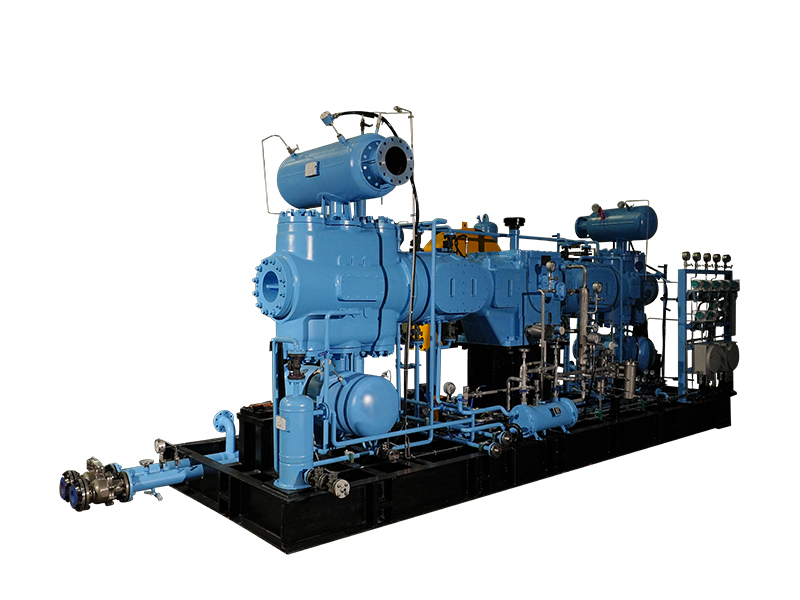
Inside a reciprocating piston compressor, the piston repeatedly changes the volume of the cylinder. When the piston moves away from the cylinder head, the pressure inside the cylinder drops and gas can enter through the suction valve. The piston then reverses direction, compressing the trapped gas until the discharge valve opens and the gas moves into the downstream system.
Although the operating principle is familiar, the actual capacity and efficiency of the machine depend on several details. Valve resistance, clearance volume, piston-ring or packing performance, cylinder design and cooling all influence how much gas is delivered during each cycle.
The gas itself also matters. A compressor handling hydrogen does not face exactly the same engineering requirements as one handling nitrogen or a chemically aggressive process gas. Molecular properties, leakage characteristics, temperature behavior and compatibility with wetted materials can all change the equipment design.
For that reason, FKW does not treat process-gas compression as a one-size-fits-all application. Its range includes piston and diaphragm technologies alongside other compressor configurations. When comparing different approaches, reviewing the compressor solutions available from FKW is more useful after the basic gas and operating requirements have been established.
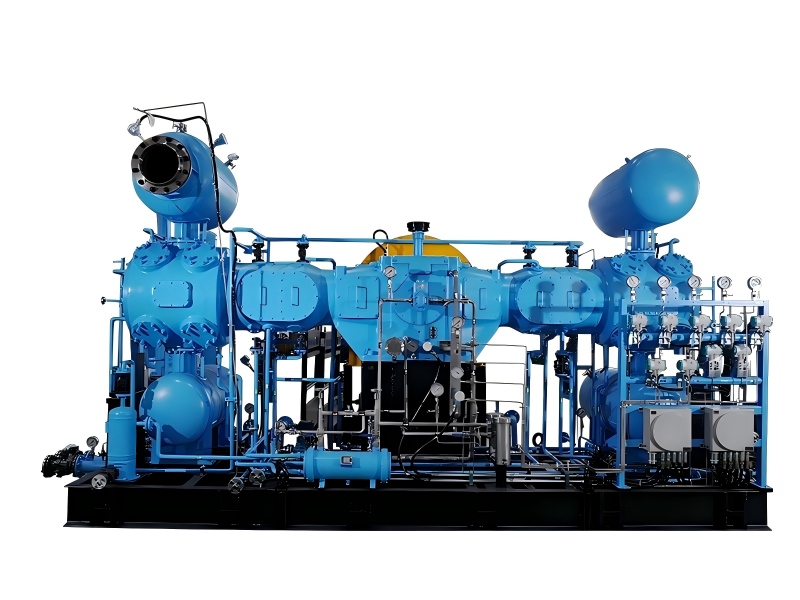
The compression cycle starts with suction. As the piston moves away from the cylinder head, the cylinder volume increases and its pressure falls relative to the suction line. Once the pressure difference is sufficient, the suction valve opens and gas flows into the cylinder.
The piston then changes direction. The suction valve closes and the trapped gas begins to occupy a progressively smaller volume. Its pressure and temperature rise as compression continues.
When the cylinder pressure reaches the required discharge condition, the discharge valve opens. Continued piston movement pushes the compressed gas into the discharge line. The cycle then starts again.
One detail that is easy to overlook is the clearance volume left inside the cylinder. Not all of the gas is expelled at the end of the discharge stroke. The remaining gas expands during the next suction stroke, occupying part of the available cylinder volume before fresh gas enters. This contributes to the difference between theoretical piston displacement and actual compressor capacity.
When higher pressure ratios are required, several cylinders or stages can be arranged in sequence. Gas leaving one stage is cooled and then compressed again at the next stage. The arrangement gives engineers more control over temperature and mechanical loading than trying to achieve the entire pressure increase in a single cylinder.
A single-stage compressor is not simply a smaller version of a multi-stage machine. The choice depends on how much pressure increase is required and how the gas behaves during compression.
As gas is compressed, its temperature rises. If the pressure ratio becomes too demanding for one stage, the resulting discharge temperature can become a significant design concern. Splitting the compression into several stages provides an opportunity to cool the gas between stages and reduce the temperature entering the next cylinder.
Intercooling can also improve the overall compression process by bringing the gas closer to its original inlet temperature before the next stage. The exact arrangement depends on gas properties, pressure conditions, cooling-water or air availability and the required process performance.
| Consideration | Reciprocating Piston Compressor | Diaphragm Compressor |
|---|---|---|
| Basic principle | A piston changes the gas volume inside a cylinder | A flexible diaphragm changes the gas volume while separating the gas from the drive side |
| Gas isolation | Depends on piston sealing and cylinder design | The diaphragm provides a physical barrier between the gas and drive mechanism |
| Contamination control | Requires careful consideration of lubrication and sealing | Well suited to applications where lubricant contamination must be minimized |
| Typical selection priorities | Capacity, pressure ratio, gas properties, cooling and mechanical design | Gas purity, leakage control, pressure, flow and diaphragm reliability |
The comparison is not about declaring one technology better than the other. A reciprocating piston compressor can be an effective solution for many industrial gas duties, while diaphragm compressors become particularly attractive when the gas must remain isolated from lubricated components.
In some applications, the main compressor concern is not simply how much pressure it can produce, but what happens to the gas while it is being compressed.
Lubrication is a good example. Conventional piston compressors may use lubricated components to control wear and maintain sealing performance. For many industrial gases, this arrangement can be perfectly practical. In applications where even small amounts of contamination are unacceptable, however, the gas-contact arrangement deserves much closer attention.
Diaphragm compressors approach the problem differently. The diaphragm separates the compressed gas from the hydraulic or mechanical drive side, preventing the process gas from directly contacting lubricating components. This makes the technology particularly useful for high-purity gases and gases that require strict contamination control.
FKW describes its diaphragm compressor design as a lubrication-free gas compression solution in which the compressed medium does not come into contact with lubricant. Its published applications include hydrogen, nitrogen, oxygen, argon, helium and various chemically active gases.
FKW also publishes diaphragm compressor configurations covering different pressure, flow and mechanical requirements. Some of its listed models reach displacement levels of up to 4,000 Nm³/h and piston forces of up to 250 kN. These are specifications for particular FKW equipment configurations, not general performance limits for all diaphragm compressors.
Gas compatibility still needs to be evaluated on a case-by-case basis. A compressor designed for one gas should not be assumed to be suitable for another simply because the pressure and flow appear similar. Materials, seals, diaphragm construction, cooling and safety requirements may all change with the process medium.
The most useful compressor inquiry starts with the process data. A pressure rating by itself tells the supplier very little about how the machine needs to be configured.
Suction pressure and discharge pressure establish the basic compression requirement. Flow rate determines the required capacity. Gas composition affects density, temperature rise, material compatibility and sealing. Inlet temperature, ambient conditions and operating hours then add another layer to the design.
Duty cycle deserves particular attention. A compressor that operates continuously for long periods faces different thermal and maintenance requirements from one used intermittently. The same applies to applications with frequent starts and stops, rapid load changes or demanding downstream pressure control.
For a reciprocating piston compressor, engineers may need to examine piston speed, valve behavior, clearance volume, sealing performance and interstage cooling. With diaphragm compressors, diaphragm stress, stroke, pressure pulsation, gas-side sealing and cooling become especially important.
Pressure should also be stated clearly as absolute or gauge pressure, while flow should be accompanied by its reference conditions where applicable. Leaving these details undefined can create significant differences between the expected and actual compressor capacity.
Once the operating conditions are clear, compressor selection becomes an engineering exercise rather than a catalog comparison. The supplier should be able to explain how the proposed machine reaches the required pressure and flow, how the gas will be cooled and sealed, and what protection is provided if operating conditions move outside the design range.
For a multi-stage machine, the stage arrangement deserves particular attention. The pressure ratio assigned to each stage affects temperature, valve loading and overall efficiency. The intercooler also has to match the actual gas and available cooling conditions.
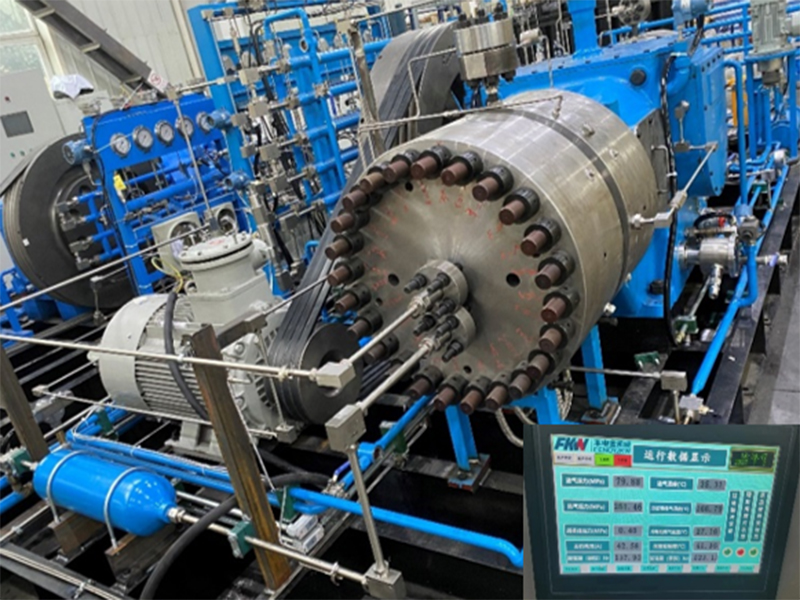
Instrumentation and protection should be considered at the same time. Depending on the application, monitoring may cover discharge temperature, pressure, cooling conditions, vibration and other operating parameters. The objective is not to add instruments for their own sake, but to make abnormal operating conditions visible before they become equipment problems.
Testing provides another important checkpoint. FKW's published information for its diaphragm compressors describes inspection of key components, including material verification, mechanical-property checks, flaw detection, hydrostatic testing and airtightness testing. Factory mechanical running tests and site acceptance procedures are also described for relevant equipment.
The exact acceptance criteria should still be agreed for each project. Capacity, pressure, leakage, temperature, vibration and other measurable parameters should be defined before testing begins so that both the supplier and end user have the same understanding of what constitutes acceptable performance.
The working principle of a compressor influences much more than the basic pressure increase. It affects how the gas enters the cylinder, how heat is generated and removed, how leakage is controlled and how mechanical components experience repeated loading.
In a reciprocating piston compressor, piston movement, valve response and sealing condition directly affect the amount of gas delivered during each cycle. As components wear, these factors can change and eventually influence capacity or efficiency.
With diaphragm compressors, the diaphragm becomes one of the central components of the compression process. Its movement must produce the required gas displacement while maintaining reliable separation between the process gas and the drive side. This is particularly important when the gas is expensive, hazardous or highly sensitive to contamination.
The practical lesson is that compressor selection should follow the process rather than the other way around. A machine with an impressive pressure rating is not necessarily the best fit if its sealing arrangement, cooling requirements or gas-contact materials do not match the application.
FKW's compressor portfolio covers piston, diaphragm, high-speed and hydrogen compression technologies for demanding industrial applications. Looking at the available technologies together can make the selection process more meaningful, particularly when the process involves high pressure, high-purity gas or challenging gas properties.
A reciprocating piston compressor relies on a simple physical principle: a piston repeatedly changes the volume of a cylinder to raise gas pressure. What makes the machine suitable for a particular industrial application depends on everything surrounding that basic movement, including valves, sealing, cooling, lubrication, materials and operating conditions.
Single-stage and multi-stage arrangements solve different compression problems, while intercooling can help manage the temperature generated during higher pressure compression. For conventional process gas duties, piston technology can provide a practical and proven solution. When gas purity or strict isolation is a major requirement, diaphragm compressors offer a different approach by separating the compressed gas from the drive mechanism.
The right choice ultimately comes from matching the compressor design with the actual gas, pressure, flow, temperature and duty requirements. If those conditions are available, discussing them with FKW's technical team can help narrow the options and determine which compression principle is better suited to the application.
A reciprocating piston compressor is a positive-displacement machine that uses a piston moving inside a cylinder to reduce gas volume and increase pressure. Suction and discharge valves control the movement of gas through the cylinder.
The piston first moves to draw gas into the cylinder. It then reverses direction and compresses the trapped gas. When the cylinder pressure reaches the required discharge condition, the discharge valve opens and compressed gas leaves the cylinder.
Multiple stages can divide a high overall pressure ratio into smaller pressure increases. This helps manage gas temperature, mechanical loading and compression performance, particularly in demanding high-pressure applications.
A piston compressor compresses gas using a piston inside a cylinder, while a diaphragm compressor uses a flexible diaphragm to separate the compressed gas from the drive mechanism. This makes diaphragm compressors particularly suitable for applications where gas isolation and contamination control are important.
Diaphragm compressors physically separate the process gas from the lubricated drive side. This design can significantly reduce the risk of lubricant entering the compressed gas and is therefore useful in high-purity and contamination-sensitive applications.
The basic information includes gas composition, suction pressure, discharge pressure, required flow, inlet temperature, operating duty and gas-purity requirements. Corrosiveness, flammability, cooling conditions and site environment should also be provided when relevant.
 Call us on:
  Email Us:
  Collaborative Innovation Industrial Park, No. 130 Yinhe Road, Southeast Development Zone, Changshu, Jiangsu Province